
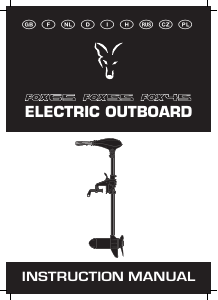
Mode d’emploi FOX 100lbs / 24 Volt Moteur hors-bord
Besoin d'un mode d’emploi pour votre FOX 100lbs / 24 Volt Moteur hors-bord ? Ci-dessous, vous pouvez consulter et télécharger gratuitement le mode d’emploi PDF en français. Ce produit a actuellement 4 questions fréquemment posées, 0 commentaires et 0 votes. Si ce n'est pas le mode d’emploi que vous souhaitez, veuillez nous contacter.
Votre produit est défectueux et le mode d’emploi n’offre aucune solution ? Rendez-vous à un Repair Café pour obtenir des services de réparation gratuits.
Mode d’emploi
Loading…


Loading…
Évaluation
Dites-nous ce que vous pensez du FOX 100lbs / 24 Volt Moteur hors-bord en laissant une note de produit. Vous voulez partager vos expériences avec ce produit ou poser une question ? Veuillez laisser un commentaire au bas de la page.En savoir plus sur ce mode d’emploi
Nous comprenons qu’il est agréable d’avoir un mode d’emploi papier pour vos FOX 100lbs / 24 Volt Moteur hors-bord. Vous pouvez toujours télécharger le mode d’emploi depuis notre site Web et l’imprimer vous-même. Si vous souhaitez disposer d’un mode d’emploi original, nous vous recommandons de contacter FOX. Ils pourront peut-être fournir un mode d’emploi original. Recherchez-vous le mode d’emploi de votre FOX 100lbs / 24 Volt Moteur hors-bord dans une autre langue ? Choisissez votre langue préférée sur notre page d’accueil et recherchez le numéro de modèle pour voir si nous l’avons disponible.
Caractéristiques
| Marque | FOX |
| Modèle | 100lbs / 24 Volt |
| Catégorie | Moteurs hors-bord |
| Type de fichier | |
| Taille du fichier | 0.93 MB |
Tous les modes d’emploi pour FOX Moteurs hors-bord
Plus de modes d’emploi de Moteurs hors-bord
Foire aux questions sur FOX 100lbs / 24 Volt Moteur hors-bord
Notre équipe d’assistance recherche des informations utiles sur les produits et des réponses aux questions fréquemment posées. Si vous trouvez une inexactitude dans notre foire aux questions, veuillez nous le faire savoir en utilisant notre formulaire de contact.
Comment bien entretenir mon moteur hors-bord ? Vérifié
L'entretien approprié d'un moteur hors-bord comprend des changements réguliers d'huile et de filtre, la vérification et le remplacement du filtre à carburant, le nettoyage ou le remplacement des bougies d'allumage et la vérification du niveau de lubrifiant pour engrenages. Il est également important de garder le système de refroidissement propre, de vérifier que l'hélice n'est pas endommagée et de garder le moteur propre. Il est recommandé de consulter le manuel de votre moteur pour les instructions spécifiques et les intervalles d'entretien recommandés.
Cela a été utile (69) En savoir plusQuel est le type d'huile recommandé et l'intervalle de vidange d'huile pour mon moteur hors-bord ? Vérifié
Le type d'huile recommandé et l'intervalle de vidange pour votre moteur hors-bord varient en fonction de la marque et du modèle de votre moteur. Il est important de consulter le manuel du propriétaire ou le site Web du fabricant pour obtenir des instructions spécifiques. En règle générale, les moteurs hors-bord 4 temps doivent utiliser une huile 4 temps spécifique à la marine, et il est recommandé de la changer toutes les 100 heures d'utilisation ou annuellement selon la première éventualité. Les moteurs hors-bord 2 temps doivent utiliser de l'huile de classe TC-W3 et il est recommandé de la changer toutes les 50 heures d'utilisation ou chaque saison.
Cela a été utile (61) En savoir plusComment hiverner correctement mon moteur hors-bord ? Vérifié
Pour hiverner correctement votre moteur hors-bord, vous devez d'abord ajouter un stabilisateur de carburant au réservoir d'essence et faire tourner le moteur pendant quelques minutes pour faire circuler le stabilisateur dans le système de carburant. Ensuite, changez l'huile et le filtre à huile et vérifiez le niveau d'huile pour engrenages. Vidanger l'unité inférieure en retirant le bouchon de vidange. Enfin, embrumez le moteur avec un lubrifiant en aérosol et couvrez le moteur pour le protéger des éléments.
Cela a été utile (52) En savoir plusComment stocker correctement mon moteur hors-bord ? Vérifié
Pour ranger correctement votre moteur hors-bord, vous devez d'abord vous assurer qu'il est nettoyé et correctement hiverné. Ensuite, retirez l'hélice et rangez-la dans un endroit sec. Enfin, couvrez le moteur et rangez-le dans un endroit sec et protégé pour éviter qu'il ne soit endommagé par les éléments. Il est également recommandé de le stocker sur un support moteur pour éviter que l'huile ne s'accumule sur l'unité inférieure.
Cela a été utile (51) En savoir plus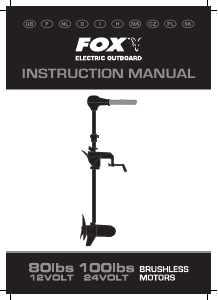



Joignez-vous à la conversation sur ce produit
Ici, vous pouvez partager ce que vous pensez du FOX 100lbs / 24 Volt Moteur hors-bord. Si vous avez une question, lisez d’abord attentivement le mode d’emploi. La demande d’un mode d’emploi peut être effectuée en utilisant notre formulaire de contact.