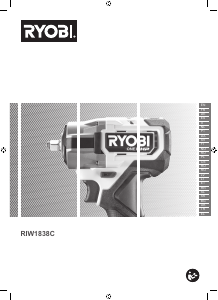
Mode d’emploi Ryobi R18IW3-0 Visseuse à choc

Besoin d'un mode d’emploi pour votre Ryobi R18IW3-0 Visseuse à choc ? Ci-dessous, vous pouvez consulter et télécharger gratuitement le mode d’emploi PDF en français. Ce produit a actuellement 1 de question fréquemment posée, 0 de commentaires et 0 votes. Si ce n'est pas le mode d’emploi que vous souhaitez, veuillez nous contacter.

Votre produit est défectueux et le mode d’emploi n’offre aucune solution ? Rendez-vous à un Repair Café pour obtenir des services de réparation gratuits.

Mode d’emploi

Loading…
English
1
EN
FR
DE
ES
IT
NL
PT
DA
SV
FI
NO
RU
PL
CS
HU
RO
LV
LT
ET
HR
SL
SK
BG
UK
TR
EL
Safety, performance, and dependability have been given
top priority in the design of your impact wrench.
INTENDED USE
The impact wrench is intended to be used only by adults
who have read and understood the instructions and
warnings in this manual, and can be considered responsible
for their actions.
The product is intended for fastening and removing screws
and bolts using an impact socket.
The product is intended for consumer use only.
Do not use the product for any other purpose. Use of the
product for operations different from intended could result
in a hazardous situation.
WARNING
Read all safety warnings, instructions, illustrations
and specifications provided with this power tool.
Failure to follow all instructions listed below may result in
electric shock, fire and/or serious injury.
Save all warnings and instructions for future reference.
IMPACT WRENCH SAFETY WARNINGS
Ŷ Hold the power tool by insulated gripping surfaces,
when performing an operation where the fastener
may contact hidden wiring. Fasteners contacting a
“live” wire may make exposed metal parts of the power
tool “live” and could give the operator an electric shock.
Ŷ Ambient temperature range for tool during operation is
between 0°C and 40°C.
Ŷ Ambient temperature range for tool storage is between
0°C and 40°C.
Ŷ The recommended ambient temperature range for the
charging system during charging is between 10°C and
38°C.
ADDITIONAL BATTERY SAFETY WARNINGS
WARNING
To reduce the risk of fire, personal injury, and product
damage due to a short circuit, never immerse your
tool, battery pack or charger in fluid or allow a fluid to
flow inside them. Corrosive or conductive fluids, such
as seawater, certain industrial chemicals, and bleach
or bleach-containing products, etc., can cause a short
circuit.
Ŷ Ambient temperature range for battery during use is
between 0°C and 40°C.
Ŷ Ambient temperature range for battery storage is
between 0°C and 20°C.
TRANSPORTING LITHIUM BATTERIES
Transport the battery in accordance with local and national
provisions and regulations.
Follow all special requirements on packaging and labelling
when transporting batteries by a third party. Ensure that
no batteries can come in contact with other batteries
or conductive materials while in transport by protecting
exposed connectors with insulating, non-conductive caps
or tape. Do not transport batteries that are cracked or
leaking. Check with the forwarding company for further
advice.
RESIDUAL RISKS
Even when the product is used as prescribed, it is still
impossible to completely eliminate certain residual risk
factors. The following hazards may arise and the operator
should pay special attention to avoid the following:
Ŷ Damage to hearing caused by noise
Wear suitable hearing protection and limit exposure.
Ŷ Injury to the eyes
Wear protective eye shields or goggles when using
the product.
Ŷ Injury caused by vibration
Limit exposure. Follow the instructions in Risk
Reduction.
Ŷ Electric shock caused by contact with hidden wires
Hold the product only by insulated services.
Ŷ Injury caused by dust
Dust created by operating the product can cause
respiratory injury. Wear appropriate dust control
mask with filters suitable for protecting against
particles from the material being worked on.
RISK REDUCTION
It has been reported that vibrations from hand-held tools
may contribute to a condition called Raynaud’s Syndrome
in certain individuals. Symptoms may include tingling,
numbness and blanching of the fingers, usually apparent
upon exposure to cold. Hereditary factors, exposure to
cold and dampness, diet, smoking and work practices
are all thought to contribute to the development of these
symptoms. There are measures that can be taken by the
operator to possibly reduce the effects of vibration:
Ŷ Keep your body warm in cold weather. When operating
the unit wear gloves to keep the hands and wrists
warm. It is reported that cold weather is a major factor
contributing to Raynaud’s Syndrome.
Ŷ After each period of operation, exercise to increase
blood circulation.
Ŷ Take frequent work breaks. Limit the amount of
exposure per day.
If you experience any of the symptoms of this condition,
immediately discontinue use and see your doctor about
these symptoms.
Télécharger mode d’emploi en Français (PDF, 2.35 MB)
(Tenez compte de l’environnement et imprimez ce manuel uniquement si c’est vraiment nécessaire)

Loading…

Évaluation

Dites-nous ce que vous pensez du Ryobi R18IW3-0 Visseuse à choc en laissant une note de produit. Vous voulez partager vos expériences avec ce produit ou poser une question ? Veuillez laisser un commentaire au bas de la page.
Etes-vous satisfait du Ryobi R18IW3-0 Visseuse à choc ?
Oui Non
Soyez le premier à évaluer ce produit
0 évaluations

Joignez-vous à la conversation sur ce produit

Ici, vous pouvez partager ce que vous pensez du Ryobi R18IW3-0 Visseuse à choc. Si vous avez une question, lisez d’abord attentivement le mode d’emploi. La demande d’un mode d’emploi peut être effectuée en utilisant notre formulaire de contact.

En savoir plus sur ce mode d’emploi

Nous comprenons qu’il est agréable d’avoir un mode d’emploi papier pour vos Ryobi R18IW3-0 Visseuse à choc. Vous pouvez toujours télécharger le mode d’emploi depuis notre site Web et l’imprimer vous-même. Si vous souhaitez disposer d’un mode d’emploi original, nous vous recommandons de contacter Ryobi. Ils pourront peut-être fournir un mode d’emploi original. Recherchez-vous le mode d’emploi de votre Ryobi R18IW3-0 Visseuse à choc dans une autre langue ? Choisissez votre langue préférée sur notre page d’accueil et recherchez le numéro de modèle pour voir si nous l’avons disponible.

Caractéristiques

Marque Ryobi
Modèle R18IW3-0
Catégorie Visseuses à chocs
Type de fichier PDF
Taille du fichier 2.35 MB

Tous les modes d’emploi pour Ryobi Visseuses à chocs
Plus de modes d’emploi de Visseuses à chocs

Foire aux questions sur Ryobi R18IW3-0 Visseuse à choc

Notre équipe d’assistance recherche des informations utiles sur les produits et des réponses aux questions fréquemment posées. Si vous trouvez une inexactitude dans notre foire aux questions, veuillez nous le faire savoir en utilisant notre formulaire de contact.

Puis-je ranger des outils électriques dans un hangar ou un garage ? Vérifié

En général, vous pouvez ranger les outils électriques dans un cabanon ou un garage, même s'il y gèle parfois. Cependant, pour préserver la durée de vie de l'outil électrique, il est préférable de le stocker dans un endroit sec et sans variations de température importantes. Dans une remise ou un garage, les différences de température peuvent provoquer la formation de condensation, ce qui peut provoquer de la rouille. De plus, les outils fonctionnant sur piles durent moins longtemps et se chargent moins bien à des températures très basses. Pour être sûr de la manière dont votre outil électrique doit être stocké, lisez toujours attentivement le manuel d'utilisation.

Cela a été utile (18) En savoir plus
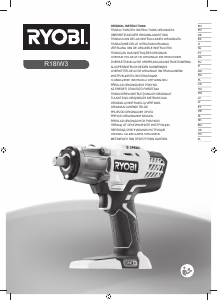
Mode d’emploi Ryobi R18IW3-0 Visseuse à choc

Produits connexes

Catégories associées

×
Download